 Nara Tours Japan
Home › Guides › Naramachi: Walking Nara's Old Merchant Quarter and Its Sake
Naramachi: Walking Nara's Old Merchant Quarter and Its Sake
Naramachi is Nara's former merchant quarter, a 20-minute walk from either station, and its lanes are easy to cover on foot. This guide covers what to see, what is free, where to eat and drink sake, and which Nara tours walk through it.
Quick answer Naramachi in brief
Naramachi is Nara's old merchant quarter, and Koshi-no-Ie, a restored townhouse, is free from 9:00-17:00 and closed Mondays. It sits a 20-minute walk from JR and Kintetsu Nara Stations. Only a few guided Nara walks spend real time inside it.
Key takeaways
- Nara tours compare the walks that include Naramachi and the ones that skip it.
- MagicalTrip Nara Half-Day Walking Tour with Lunch lists Naramachi among its stops and runs 5 hours at $101.80 per person.
- Kampai Nara Sake Tour with 2 Breweries and Tastings spends 3 hours in the district at $108.85 per person.
- Pair it with Kofukuji, a 5-minute walk from Kintetsu Nara Station.
Is Naramachi Worth Visiting?
Yes, if you have 1-2 hours after Nara Park and like quiet lanes, small museums, sweets and sake more than big temples.
Naramachi is a neighborhood where people still live and work, so the pleasure is the walk, not one headline sight.
What Kind of Place It Is
Naramachi grew around the old grounds of Gangoji Temple. The Nara City Tourism Association says it was part of Heijo-kyo, the capital of the Nara period, and later became the area's commercial center. Houses and temples from the Edo period to the postwar years still stand.
The district is compact. The Nara Visitors Bureau describes it as a compact area that is easy to cover on foot. Today the narrow lanes hold sweet shops, galleries, cafes and small inns.
It works best as a second half of a Nara day. Nara Park is about an 8-minute walk from Kintetsu Nara Station, so a morning in the park and an afternoon in Naramachi fit together. The things to do in Nara guide shows how the other sights line up.
Who Should Skip It
If you only have the 1 hour that the Kyoto loop coach days give in Nara, spend it on the Great Buddha Hall, not here. Naramachi rewards a slow walk with no fixed target.
The Nara Visitors Bureau notes that cool shop interiors help on hot summer days, and that the shops give shelter on cold winter days and in wet weather. That makes it a good fallback when Nara Park is rained out. Read the Nara tours comparison if you are still choosing between a coach day and a walk.
Sources: Nara Visitors Bureau, Nara City Tourism Association, Nara City Tourism Association.
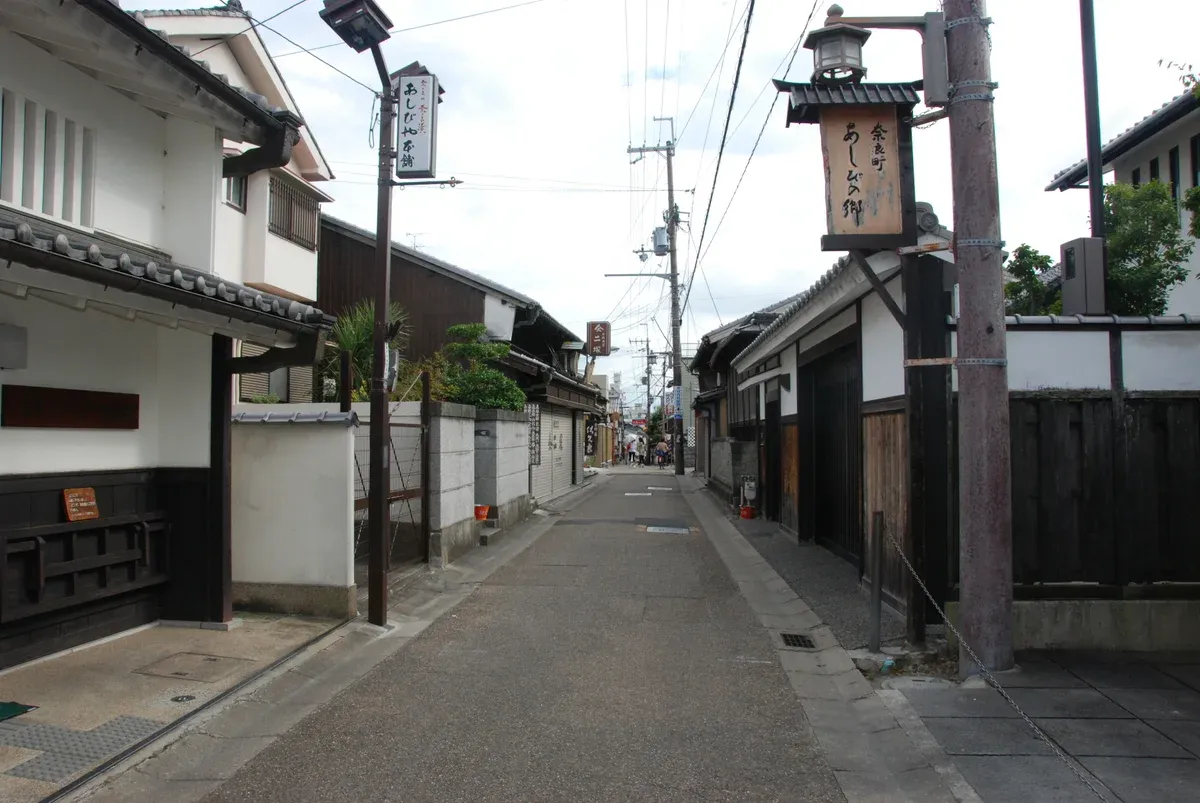
Naramachi's lanes are a quiet few blocks of old merchant houses south of Nara Park. Photo: Maarten Heerlien from Voorschoten, The Netherlands, CC BY 2.0, via Wikimedia Commons
What to Do at Naramachi?
Walk the lanes, step inside a restored townhouse, look for the red migawarisaru charms, stop at Gangoji Temple and try the sweets or sake.
These are the stops that most visitors build the walk around, with what each one costs.
Gangoji Temple and the Start of the District
Gangoji is the reason Naramachi exists. The Nara Visitors Bureau says the temple was first built in Asuka and later moved here. The Nara City Tourism Association lists it among Nara's World Heritage sites, and its Gokurakudo Hall is a national treasure.
Look up at the roof and you can still see old roof tiles from its predecessor, Hokoji Temple, mixed with newer ones. Fires destroyed many original buildings, so the grounds are now small.
Machiya Townhouses and Koshi-no-Ie
Machiya are the long, narrow merchant townhouses of the Edo period. The Nara Visitors Bureau explains that taxes were set by frontage, so the houses were built narrow at the front.
Koshi-no-Ie is the easiest one to enter. The Nara City Tourism Association lists admission as free, open 9:00-17:00 and closed Mondays, a 20-minute walk from JR and Kintetsu Nara Stations. Japan National Tourism Organization says it has a shop space at the front and living quarters at the rear.
Naramachi Nigiwai-no-Ie is a renovated historic house, open to visitors, according to the JNTO education site.
Migawarisaru and the Deer Lattice
Red cloth charms hang from the eaves of many houses. They are called migawarisaru, or scapegoat monkeys, and the Nara Visitors Bureau says they have hung there since the Edo era to protect residents. Families hang one for each member and write wishes on the back.
Look also for rounded wooden slats on house fronts. The JNTO education site calls them shika-goshi, the deer lattice, and links them to the antler cutting once done in town. The rounded shape protected houses and kept deer from hurting themselves.
Karakuri Toys and Small Museums
Naramachi Karakuri Omochakan is a toy museum where visitors may play with the traditional mechanical toys, says Japan National Tourism Organization. Staff explain how each toy works, so it suits families. Other small museums cover Nara crafts and the district's own history.
| Stop | What it is | Cost and hours |
|---|---|---|
| Gangoji Temple | World Heritage temple | Check the temple for fees |
| Koshi-no-Ie | Restored merchant townhouse | Free, 9:00-17:00, closed Mondays |
| Nigiwai-no-Ie | Renovated historic house | Open to visitors |
| Karakuri Omochakan | Toy museum, toys can be handled | Check the museum for fees |
| Sarusawa Pond | Man-made pond | Free to walk around |
Sources: Nara Visitors Bureau, Nara City Tourism Association, JNTO, JNTO.
Where Is Naramachi?
Naramachi lies south of Sarusawa Pond and Kofuku-ji, a short walk from Kintetsu Nara Station and about 20 minutes on foot from JR Nara Station.
- 1 Kintetsu Nara StationKintetsu trains from Kyoto and Osaka-Namba. Most walking tours meet here.
- 2 JR Nara StationJR trains from Kyoto and Osaka, about 20 minutes on foot from Nara Park.
- 3 Kofuku-ji5 minutes on foot from Kintetsu Nara. The pagoda is under repair.
- 4 NaramachiOld merchant streets south of Sarusawa Pond.
- 5 Nara Park deer lawnsWhere the deer gather and crackers are sold.
Numbers match the pins on the map.
Source: Nara City Tourism Association.
Where to Walk in Naramachi?
Start at Kofukuji or Sarusawa Pond, drift south into the lanes toward Gangoji and Koshi-no-Ie, and loop back with no fixed route.
The Nara Visitors Bureau says wandering and getting a little lost is the best way to see the district. A loose order still helps.
A Simple Order for the Walk
Start at Sarusawa Pond, which the Nara Visitors Bureau calls a good landmark. It has tree-shaded seating and a large tourist information center that runs cultural experiences such as calligraphy and origami. Kofukuji is a 5-minute walk from Kintetsu Nara Station, so many people combine the two.
From the pond, walk south into the lanes. Pass the Gangoji grounds, stop at Koshi-no-Ie, then follow the migawarisaru past the sweet shops. The Nara City Tourism Association says information centers can supply a map, and its tourism office issues an old map of the Gangoji-era streets that is fun to compare with today.
The district is a grid of narrow lanes, and returning to a shop you liked can be hard. Take a map and note your finds.
- Sarusawa Pond and the visitor center
- Kofukuji, 5 minutes from Kintetsu Nara Station
- Gangoji Temple and the lanes around it
- Koshi-no-Ie, free and closed Mondays
Gardens at the Edge of the District
Two gardens sit near Nara Park. Isui-en garden and the Neiraku Museum cost 1,200 yen for adults, open 9:30-16:30 and closed Tuesdays. Yoshiki-en is free, open 9:00-17:00, with last entry 16:30, and is a 10-minute walk from Kintetsu Nara Station.
Both close on a different day or earlier than the lanes, so check the weekday. Koshi-no-Ie shuts Mondays and Isui-en shuts Tuesdays, so one of the two is open on any day.
Sources: Nara Visitors Bureau, Nara City Tourism Association, Nara City Tourism Association, Nara City Tourism Association.
Tours That Fit
These guided walks put Naramachi on the route, one as a stop and one as the whole tour.
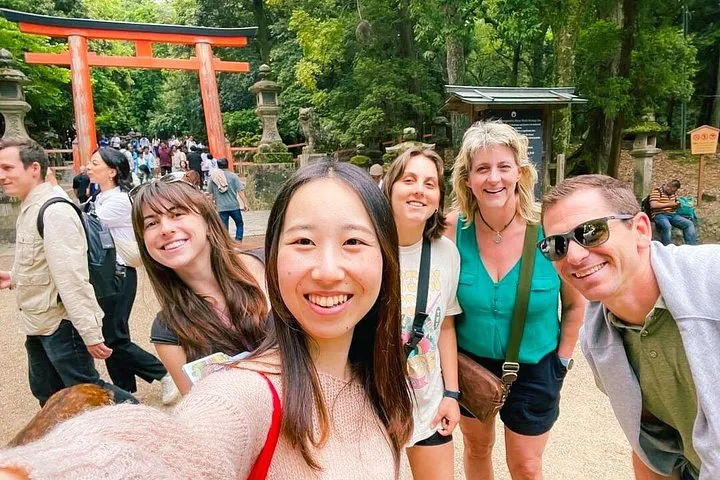 from $101.80
With lunch
MagicalTrip Nara Half-Day Walking Tour with Lunch
The longest group walk: Naramachi, Kofuku-ji, Todai-ji and Nigatsu-do with every temple fee and lunch included.
Check Availability from $108.85
Sake
Kampai Nara Sake Tour with 2 Breweries and Tastings
About 10 sake tastings at two Nara breweries and a sake shop in Naramachi, with no temple on the route.
Check AvailabilityWhat to Eat and Drink in Naramachi?
Try Yamato vegetable dishes, cha-gayu rice stewed in tea, kaki-no-ha-zushi, wagashi sweets and Nara sake.
Many cafes and restaurants occupy former townhouses, so lunch doubles as a look inside one.
Local Dishes and Sweets
The Nara City Tourism Association names three local dishes: Yamato vegetables, cha-gayu and kaki-no-ha-zushi, which is pressed sushi wrapped in persimmon leaves. Mochiidono Shopping Street leads into the district.
On Shimomikado Street, Nakanishi Yosaburo is a long-established maker of wagashi for tea ceremonies, according to the Nara Visitors Bureau. One popular sweet copies the strings of migawarisaru.
Sake in Naramachi
Nara is known for sake, and the Nara Visitors Bureau names the Harushika Sake Imanishi Seibei Store as a good place to learn about brewing. You can tour the brewery and the family's historic residence and garden, taste varieties, or visit the cafe and shop.
If you want sake without arranging it yourself, Kampai Nara Sake Tour with 2 Breweries and Tastings costs $108.85 per person for 3 hours. It meets at Kintetsu Nara Station, covers around 10 tastings at two breweries and a sake shop, and includes a visit to a merchant townhouse. Food, snacks and bottles are not included, and the tour does not visit Todai-ji or other temples.
Sources: Nara City Tourism Association, Nara Visitors Bureau.
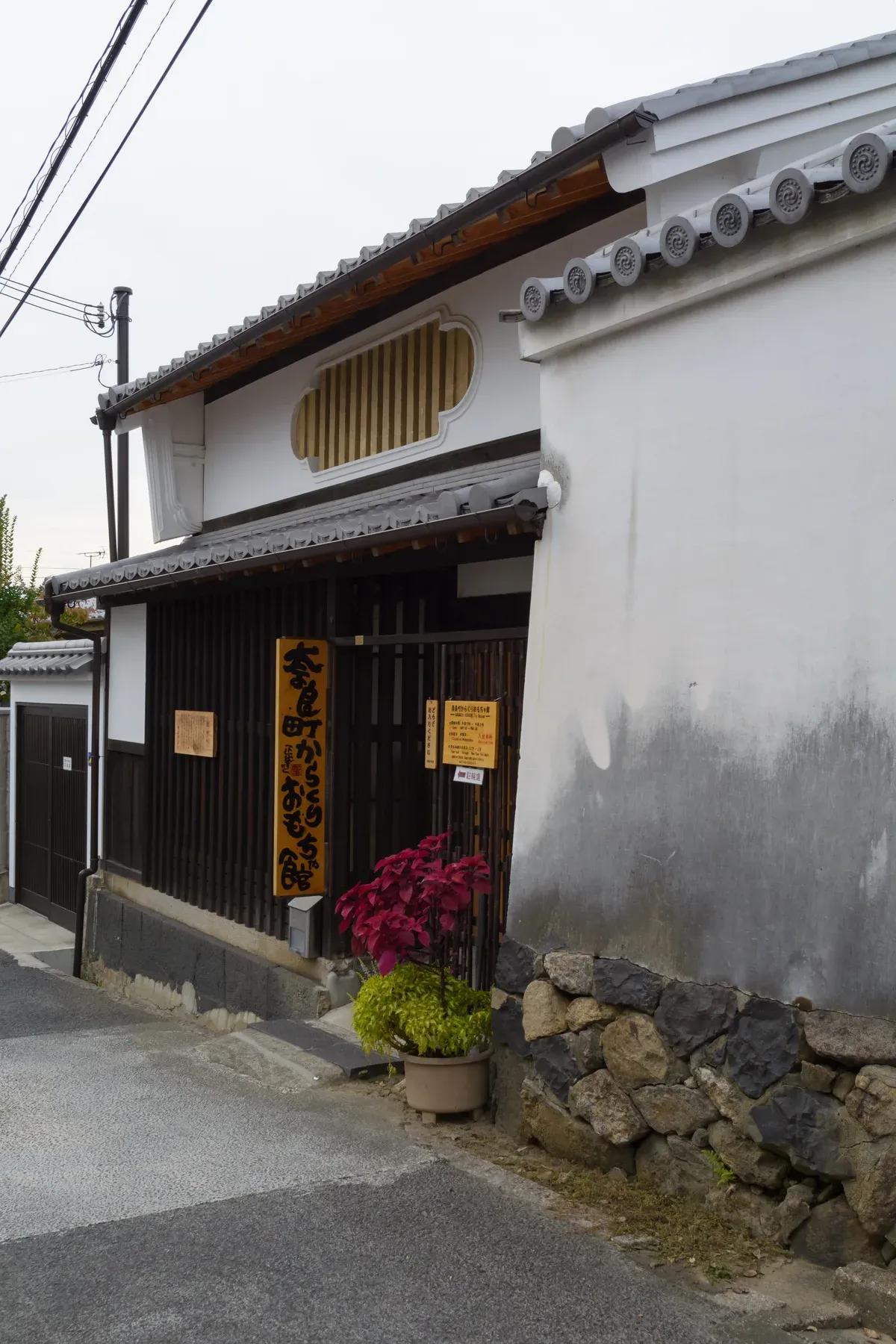
The Karakuri Toy Museum is one of several small machiya open to visitors. Photo: Degueulasse, CC BY 3.0, via Wikimedia Commons
How Do You Get to Naramachi?
Walk about 20 minutes from JR or Kintetsu Nara Station, or ride a loop bus.
The district is on the way between the stations and Nara Park, so most routes pass it.
From Kyoto or Osaka to Nara
The Nara Visitors Bureau gives JR Rapid as about 41 minutes from Kyoto and about 52 minutes from JR Osaka to JR Nara. The Nara City Tourism Association gives the Kintetsu direct train from Namba as about 40 minutes. The full options are in Kyoto to Nara and Osaka to Nara.
| From | Route | Time |
|---|---|---|
| Kyoto | JR Rapid to JR Nara | About 41 minutes |
| Osaka | JR Rapid to JR Nara | About 52 minutes |
| Osaka-Namba | Kintetsu direct train | About 40 minutes |
Last Stretch on Foot or by Bus
The Nara City Tourism Association lists Koshi-no-Ie as a 20-minute walk from JR and Kintetsu Nara Stations. The Nara Visitors Bureau says loop buses stop in and around the district. Check the Nara Visitors Bureau for current passes.
It lists the Nara 1-Day Pass at 600 yen for adults and Gurutto buses at 100 yen per trip. Bus days pay off only if you also ride out to Todai-ji or Kasuga Taisha.
Sources: Nara Visitors Bureau, Nara City Tourism Association, Nara Visitors Bureau.
Which Nara Tours Include Naramachi?
A few walks and one private car day stop in Naramachi, and one sake walk is built around it.
Most Nara tours go straight from the park to Todai-ji. These are the ones that put Naramachi on the route.
Tours Compared by Naramachi Time
The table compares the tours that list Naramachi among their stops, showing the route, length and whether the Todai-ji ticket is in the price.
MagicalTrip Nara Half-Day Walking Tour with Lunch is the longest group walk, with Naramachi, Kofukuji, Todai-ji and Nigatsu-do. Nara Deer, Great Buddha and Mochi Tasting Walking Tour includes Naramachi and a mochi tasting. Read Todaiji Temple before you decide which ticket matters to you.
| Tour | Naramachi on the tour | Length | Todai-ji ticket |
|---|---|---|---|
| MagicalTrip Nara Half-Day Walking Tour with Lunch | One of its stops, lunch included | 5 hours | Included |
| Nara Deer, Great Buddha and Mochi Tasting Walking Tour | A stop on the route, with mochi tasting | 4 hours | Included |
| Kampai Nara Sake Tour with 2 Breweries and Tastings | The whole tour, on foot | 3 hours | No temple visit |
| Nara Private Day Tour by Car with Hotel Pickup from Osaka or Kyoto | One stop on a customizable route | Listed as a 10-hour tour | Not included |
Sources: Nara City Tourism Association, Nara Visitors Bureau.
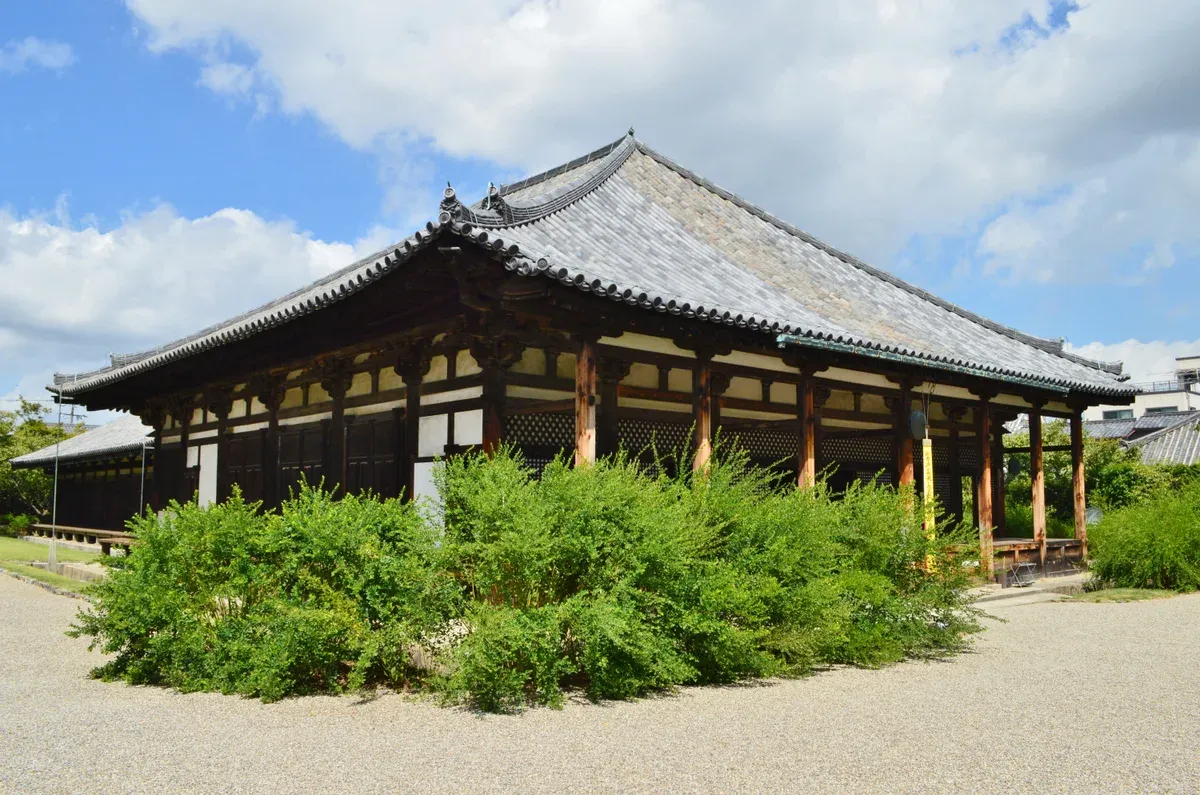
Gango-ji is a World Heritage temple just inside the Naramachi district. Photo: Saigen Jiro, CC0, via Wikimedia Commons
Naramachi FAQ
Is Naramachi worth visiting?
Yes for a slow walk with small museums, sweets and sake, and no for a rushed 1-hour Nara stop. Combine it with Nara Park, as the things to do in Nara guide suggests.
What to do at Naramachi?
See Gangoji Temple, step into Koshi-no-Ie (free, closed Mondays), look for migawarisaru and try local sweets or sake. The Nara tours page lists guided options.
Where to walk in Naramachi?
Begin at Sarusawa Pond, then wander south toward Gangoji. The area is compact, so you can loop it in 1-2 hours. Pair it with Kofukuji.
How far is Naramachi from Nara Park?
Koshi-no-Ie is a 20-minute walk from either station, and Nara Park is about 8 minutes from Kintetsu Nara Station. See the Nara Deer Park rules before you feed the deer.
Is Koshi-no-Ie free?
Yes. It is free, open 9:00-17:00 and closed Mondays. The Kasuga Grand Shrine guide covers a nearby stop with fees.
Can you do a sake tasting in Naramachi?
Yes. The Harushika brewery store offers tours and tastings, and a guided option is the Kampai Nara Sake Tour with 2 Breweries and Tastings.
More Guides
- Things to Do in Nara: Temples, Deer, Gardens and Evening Walks
Things to do in Nara for 2027: Todai-ji, Kasuga Taisha, the deer, gardens and Naramachi with fees, hours and tours.
- Kofukuji: The Temple by Nara Station, Its Pagoda and Treasure Hall
Kofukuji for 2027: 5 minutes from Kintetsu Nara Station, the pagoda under repair, what is open, the fees and the tours.
- Nara Walking Tour: Guided Walks to the Deer, Todai-ji and Kasuga Taisha
Nara walking tours for 2027: 3 to 5 hour guided walks, where each starts and whether the Great Buddha Hall ticket is in.